




For a commercially successful development of edge devices for a wide range of applications, a whole ecosystem of tools and hardware components is mandatory. Ensuring the safe, secure, and reliable design and operation of these devices is an indispensable, but challenging requirement for many of these applications. The Scale4Edge project aims to address this challenge by enabling a comprehensive RISC-V-based ecosystem that helps ensure the correct and secure functioning throughout the whole design process and lifetime of an edge system: The ecosystem encompasses tools for functional verification—both using virtual prototypes in an early stage of development and using formal methods—, security verification, software-based self-test (SBST), and system visualization and debugging. With the development of this hardware verification and validation ecosystem, the Scale4Edge project aims to create optimized and reliable edge devices that meet the high demands of modern industries.
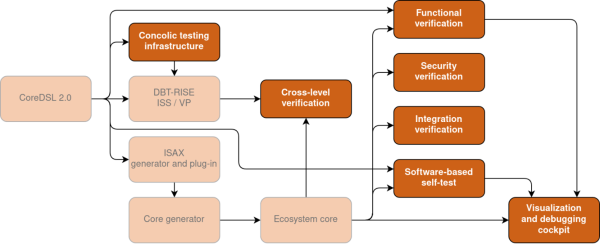
Figure 1: The Scale4Edge Hardware Verification Ecosystem
The Scale4Edge project has made significant strides in hardware verification and validation for RISC-V platforms, with multiple partners contributing to its success. The components of the hardware verification ecosystem are shown in Figure 1. The University of Bremen developed a comprehensive cross-level verification approach and a concolic testing infrastructure. Siemens EDA—an associated partner—created new functional verification tools for processor verification while the University of Kaiserslautern-Landau (RPTU) focused on formal security analysis with Unique Program Execution Checking (UPEC). The FZI Research Center for Information Technology (FZI) devised methods for specifying, generating, and verifying hardware properties in System-on-Chip (SoC) platforms, with the University of Freiburg and Concept Engineering contributing to in-field monitoring and testing (SBST) as well as debugging and visualization tooling. The collaborative efforts of the project partners around the Scale4Edge ecosystem core, developed by MINRES according to the ISO 26262 safety standard, resulted in a comprehensive hardware verification and validation flow with award winning methods and industry-proven EDA tools.




 Many application domains including automotive, industry automation, IoT, and space, require the usage of well-tailored edge devices capable of processing data from various sensor sources using AI, DSP, and classical software algorithms. Data processing at edge devices must satisfy real-time requirements while consuming as little electric energy and memory footprint as possible. Moreover, for many applications, the aspects of safety, security, and reliability are equally important as performance or electric energy consumption. Therefore, application-specific system-on-chip architectures for edge devices require high customization in terms of the most appropriate performance class of the processor core including necessary custom processor extensions, the memory architecture and capacity, and the design of a parameterizable AI accelerator architecture. The BMBF project Scale4Edge aims at enabling a comprehensive RISC-V-based ecosystem to efficiently assemble optimized edge devices.